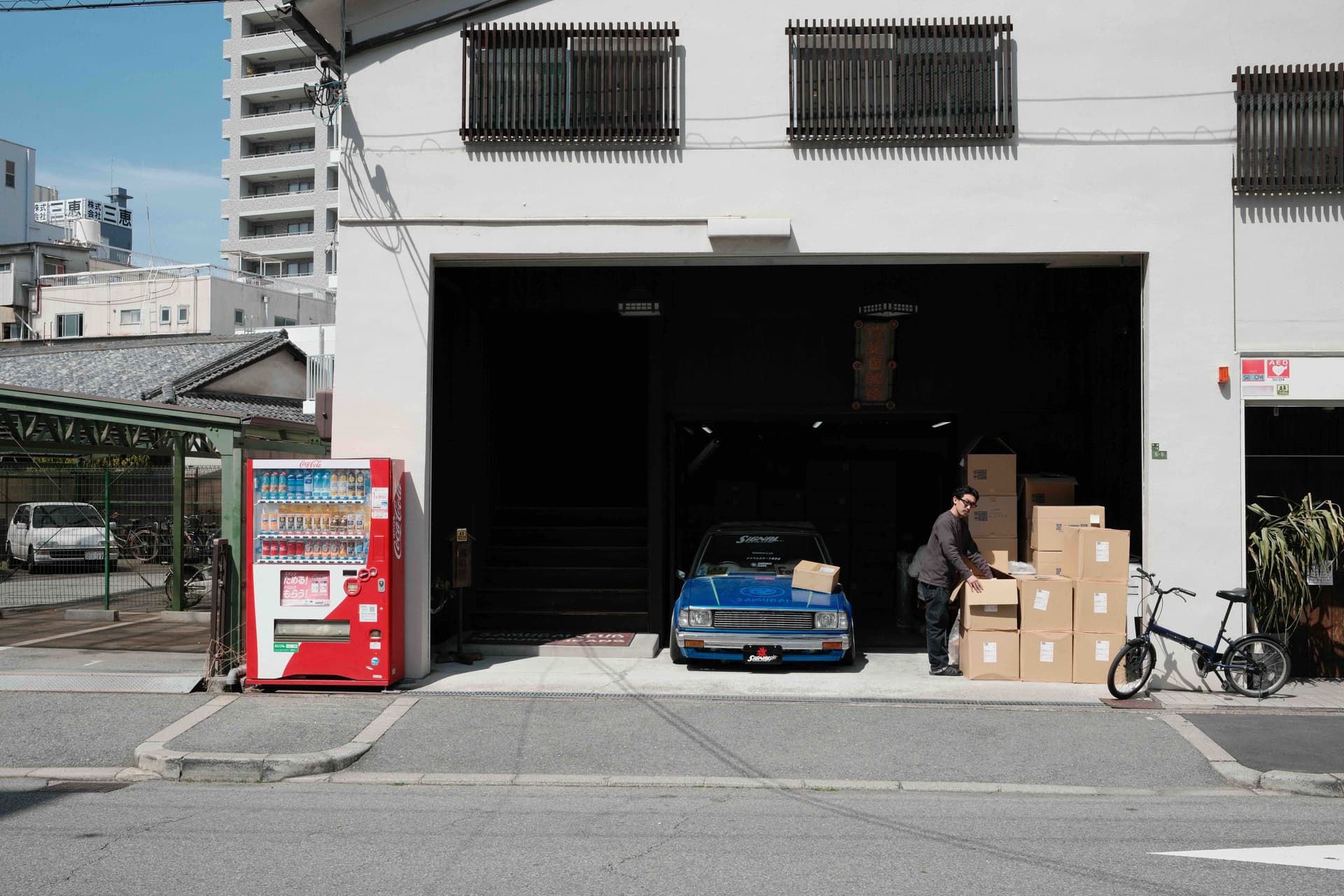
One Reservation
When I was younger, I was really concerned with if I should label myself Iranian or American. I was afraid of mislabeling myself, of claiming to be something I'm not. In my mind, the two groups of people were completely distinct, and it was important to me to make sure I put myself in the right category.
As I've grown older, I've come to understand that the two peoples are not as separate as I once thought, and that the labels are not distinct categories, but subcategories of a broader group, humans as a whole. There are many differences between nationalities, but they also have plenty of things that bring them together. People across the globe listen to music, enjoy a good meal, and watch the sunset. The specific details may differ from place to place, but the sentiment is mostly the same.
I visited Japan for the first time in December of 2024, and I remember looking around at the people on the train and thinking to myself, "I will likely never know anything about the lives these people live. We don't speak the same language, so how could I ever really understand them or their experiences?"
Anthony Bourdain, whose book I read over this past summer, would probably be upset with that way of thinking. You don't need to speak the same verbal language to understand someone else. Some things, like food, are universal connectors.
Let me give you an example, from my second trip to Japan last week. I went with my friends from high school, and on Thursday, we got omakase in Shibuya. Omakase is a multiple course meal where you pay and the chef decides what you eat. Our chef was very friendly, and despite his limited English and our limited Japanese, we got along pretty well with him. My friend bought him two beers, and after the meal, asked if the chef wanted to go out to a bar with us. The chef said yes, and told us to meet back up with him after he went home and showered.
We met back up with him an hour or two later, and he took us to his friend's karaoke bar in Shinjuku. We sat at that karaoke bar late into the night, singing songs with these four Japanese guys we had just met. One of them turned to us and said he loved hearing native English speakers sing English songs, and told us how he liked Ed Sheeran. Our singing was terrible, but it still seemed to make them pretty happy.
The same can be said of us, hearing them sing in Japanese. They all had great voices, and we listened to them sing some anime openings, which I think they chose because they were songs we recognized. I left at 5 am, and walked back to our apartment. Before I left, our new friends wished me well, and hoped I got home safely.
Did the language barrier matter? Not at all. To be honest, I'm beginning to believe that speaking the same language, generally, is not as important for human connection as I thought it was. In my life, the people who have understood me the least have been those with masterful control of the English language. A lot of understanding comes from a look into a person's eyes, the smile on their face as they eat something that reminds them of home, the things they stop to take pictures of, maybe even what they do on the subway on their way to work. Understanding is not about language. It's about making an effort to see the world through their eyes.
People in other countries can feel distant at times, but they're more similar to you than they are different. I don't mean to discount the real cultural and historical differences between nations, but those shouldn't make you fearful of another place. You shouldn't ever let something as simple as your nationality keep you from making a friend. Bourdain said it best, "The extent to which you can walk in someone else's shoes or at least eat their food, it's a plus for everybody."
Subscribe for more writing